Drone façade cleaning: innovation at height.
A cutting-edge technology for cleaning façades and glazed surfaces, designed to reduce the complexity and risks associated with working at height.
The complexity of working at height.
A clean façade enhances the appearance of a building and helps preserve it over time. Cleaning façades often requires specialist equipment, scaffolding and extensive safety measures. Ensuring high-quality results while protecting employees can involve complex planning and coordination. This is why we are exploring drone façade cleaning, a technology that is reshaping facility management.
Our goal is not to adopt technology simply because it is innovative, but to understand whether it can offer tangible advantages. That is why we have launched a series of tests in the field.
How does it work?
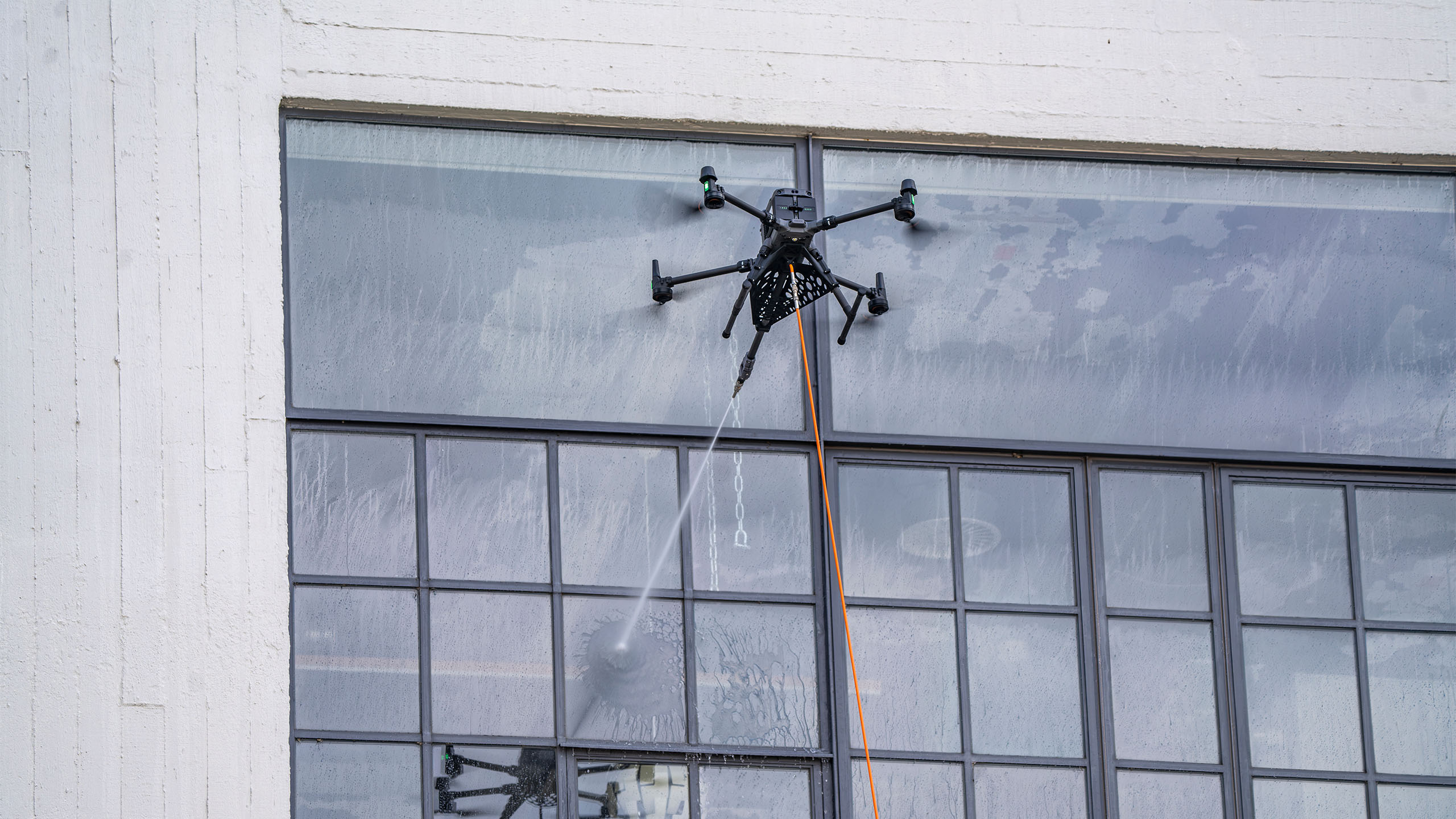
Drones equipped with integrated washing systems clean façades directly from the outside. Depending on the level of soiling, they can use detergents or osmosis-treated water alone, significantly reducing the need for mobile elevating work platforms.
What are we evaluating?
We assess both strengths and limitations through a pragmatic approach. We analyse cleaning quality, execution times, accessibility and the impact on day-to-day activities within the facility.
The practical value of innovation.
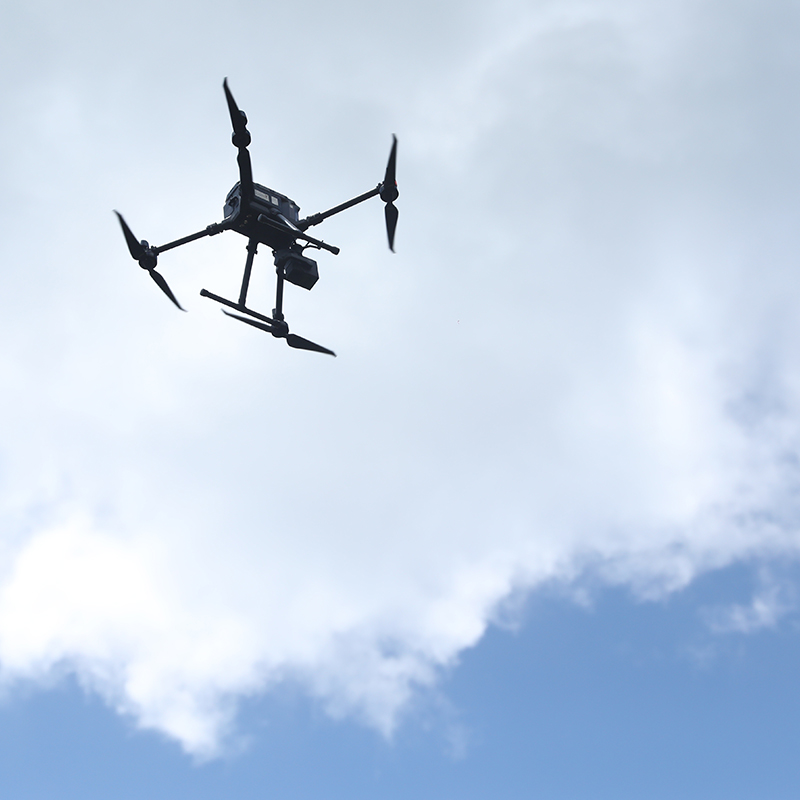
The aim of this trial is to understand how technology can provide practical support for employees while enhancing the level of service we deliver.
The use of drones on complex surfaces significantly reduces employees’ exposure to the risks associated with traditional work at height.
Reducing the need for scaffolding and heavy equipment helps speed up operations, minimising disruption and allowing day-to-day activities to continue as normal.
A forward-looking solution designed to expand maintenance options for hard-to-access spaces.
Test, measure and learn.
In recent years, we have explored a range of automation solutions across our services, always following the same approach: gathering data to understand which technologies can make a meaningful difference. If the results continue to prove positive, this technology could become a new standard for the management of façades and other surfaces.
We are open to innovation.